Temahahoi na Tirosen
- Single-channel HD Video
- 15 minutes 18 secs
- 2026
《Temahahoi na Tirosen》 探討數位媒介、口傳歷史與感知之間的斷裂與重組。作品的核心構建於一次失效的田野記錄——2019年於台南麻豆三元宮公廨拍攝時發生的 「全片當機」 的經驗。
本計畫將歷史文獻中關於「荷治時期 Inbis 被流放至諸羅山(Tirosen)」的記載,與創作者的潛意識夢境進行疊合。在作品中,數位亂碼不再是技術性的錯誤,而是作為一種「邊界模糊」的語彙,模糊著在歷史幽谷中流離的 Inbis(西拉雅族的尪姨) 與口述中 Temahahoi 祖先們可能的相遇, 透過與 Inbis 陳秋燕的聲音協作重構 。
田調訪問對象:
Inbis 陳秋燕
Inbis 尤威仁
Vukin Takalomay 吳俊霖
Alak Akatuang 段洪坤
台南官田雅麗絲髮廊
本計畫將歷史文獻中關於「荷治時期 Inbis 被流放至諸羅山(Tirosen)」的記載,與創作者的潛意識夢境進行疊合。在作品中,數位亂碼不再是技術性的錯誤,而是作為一種「邊界模糊」的語彙,模糊著在歷史幽谷中流離的 Inbis(西拉雅族的尪姨) 與口述中 Temahahoi 祖先們可能的相遇, 透過與 Inbis 陳秋燕的聲音協作重構 。
田調訪問對象:
Inbis 陳秋燕
Inbis 尤威仁
Vukin Takalomay 吳俊霖
Alak Akatuang 段洪坤
台南官田雅麗絲髮廊
Temahahoi na Tirosen explores the disconnect and eventual reconstruction of digital media, oral history, and human perception. The heart of the work is built on a "failed" field recording—a total system crash that occurred in 2019 while I was filming at the Sanyuan Temple shrine in Madou, Tainan.
The project overlays historical records of Inbis (Siraya priestesses) being exiled to Tirosen (present-day Chiayi or unknown mountain area) during the Dutch colonial period with my own subconscious dreams. In this work, digital glitches are no longer seen as technical errors; instead, they become a visual language of "blurred boundaries." They represent the hazy, possible encounter between the Inbis of history and the Temahahoi ancestors, by weaving together the voice of Inbis Chen Chiu-yen.
The project overlays historical records of Inbis (Siraya priestesses) being exiled to Tirosen (present-day Chiayi or unknown mountain area) during the Dutch colonial period with my own subconscious dreams. In this work, digital glitches are no longer seen as technical errors; instead, they become a visual language of "blurred boundaries." They represent the hazy, possible encounter between the Inbis of history and the Temahahoi ancestors, by weaving together the voice of Inbis Chen Chiu-yen.
Temahahoi na Tirosen, stills 2026
Pswagi Temahahoi
- Single-channel HD Video, colour, sound, Sound script, mixed media 39 x 54cm, Photography I, II, III , digital print series 95.5 x 53.17cm, Ceramic ocarina: hand-built from Nantou/Miaoli region sourced yellow clay (set of 12), size and weight variable, 2022
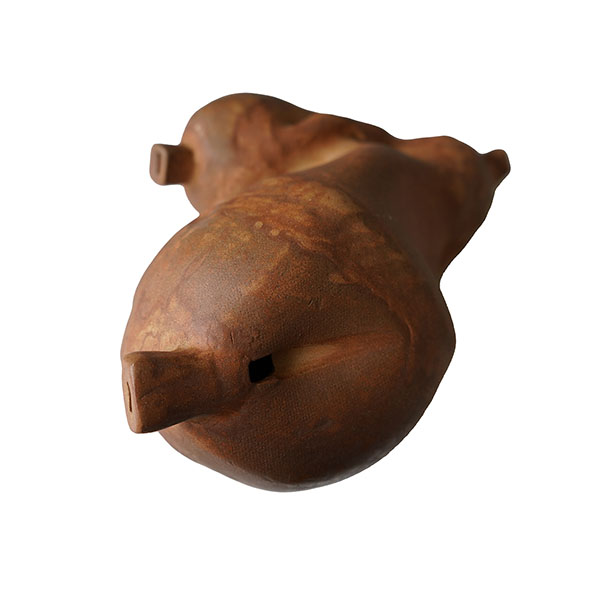


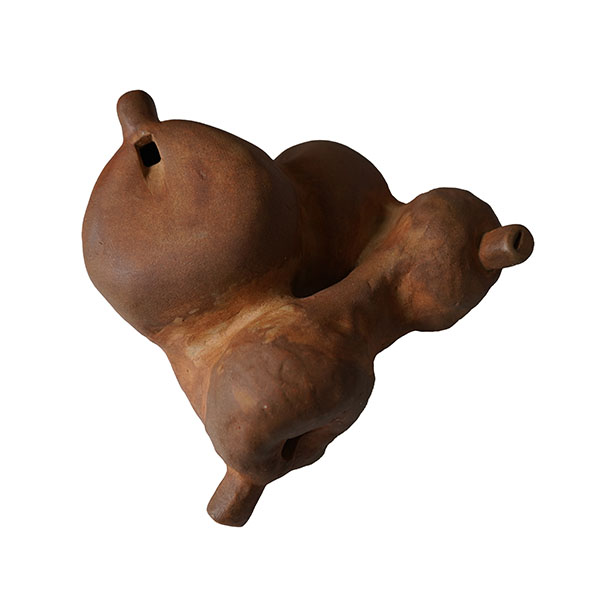

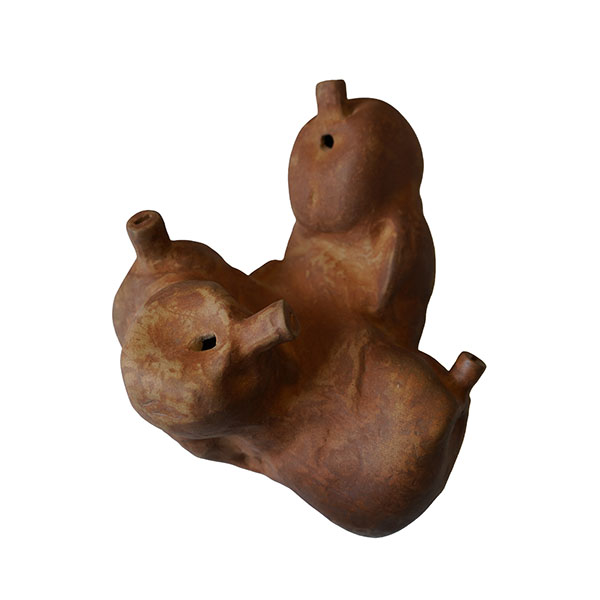


《Pswagi Temahahoi》在泰雅族語裡「P」有表示未來之意、「S」則是工具格的字根,「Wagi」是太陽的意思,當他們合起來「Pswagi」就隱含著透過光作為工具,而因為該字有未來式,所以它是一個準備利用「光影」作為工具和即將發生的事情,Temahahoi (女人社) 為帶有酷兒特質的泰雅族群極少被提起的口述故事。此次創作透過田野紀實紀錄影像與行為藝術表演,混合交織形成一件錄像裝置作品,其中還有包括自製的陶笛以及樂譜作為行為表演的一部分,紀實影像中跟隨著泰雅族耆老 Yumin 的 pswagi「光影」知識技術去尋找野生蜂蜜的位置,如此收尋的過程在作品裡再次被轉換成去尋找已經被遺忘的 Temahahoi 的路徑,作品中出現的自製陶製樂器作為招喚 Temahahoi 的聲譜,試圖重新尋找一個沒有具體座標 Temahahoi 的位置。《Pswagi Temahahoi》延續先前的《她可能來至__社》的創作脈絡,口述故事 Temahahoi(女人社),透過創作再次被詮釋與開拓女性和酷兒身體的空間可能性,與此同時預言似地交錯回應環境議題與安靜無聲的酷兒身體之關係、隱喻似地連結氣候危機下的蜜蜂減少與邊緣族群的消失。
Pswagi Temahahoi is part of the ongoing body of work Finding Pathways to Temahahoi. Exploring the further possibility of the space of Temahahoi by combining documentary video work alongside visual and sound performance to weave together a hybrid video installation piece. Temahahoi tells of a place where only women live. The community can communicate with bees and become impregnated by wind. The documentary follows the path taken by Atayal Elder Yumin, who uses a technique named ‘pswagi’, to trace the locations of wild bees. Alongside, a performance piece with a self-invented and assembled ceramic instrument as a way to relocate the space of Temahahoi through sound. The work Pswagi Temahahoi is a continuation of the previous artwork, Perhaps She Comes From/To_Alang, which addresses the possibility of re-interpreting and opening up the space of Temahahoi for women and gender diverse bodies.


Perhaps, She Comes From/To ____ Alang
她可能來至__社
Performance: Anchi Lin [Ciwas Tahos] / Atayal language consultant: Apang Bway (劉芝芳) / Voice contributors: Apang Bway (劉芝芳), Yukan Maray (林孝緒), Yukan Masa (許雍) / Virtual technician: Wei-Hsuan Hung (洪偉瑄)
- Double-channel HD Video, sound, colour, duration 11 mins 23 secs (looped), 2020
《她可能來至__社》此作品結合泰雅族口述故事Temahahoi(直譯:在深林裡的某一個地方)裡面所提起女人可以與蜜蜂(土蜂)溝通和土地之間的關係,此古老的故事對創作者來說是屬於酷兒族群的空間,它們在深林裡面所建構的避居地,避開異性戀為本體的空間,故事裡給予一個警示,它們的生存依賴著自然生態的維持。錄像裡的故事結構結合三個敘事脈絡來探討身份認同、性別、族群、口傳故事、土地流失和散離經驗。Temahahoi、鎮西堡部落耆老們所提到日據時代日本人送給他們的黃銅鍋造成部分族人有不孕的狀態反應到我的身體性別和對於沒有土地的離散經驗,一種嚮往擁有土地的座標,讓我不經意的轉換和寄託這樣的感覺到網路雲端,再創一個第三空間,同時也是一個地址(座標)https://raxal-mu.glitch.me(直譯:我的土地、當機的我),這個雲端空間會隨著我的知識或故事的增加而慢慢延展擴大。
![]()
![]()
![]()
![]()
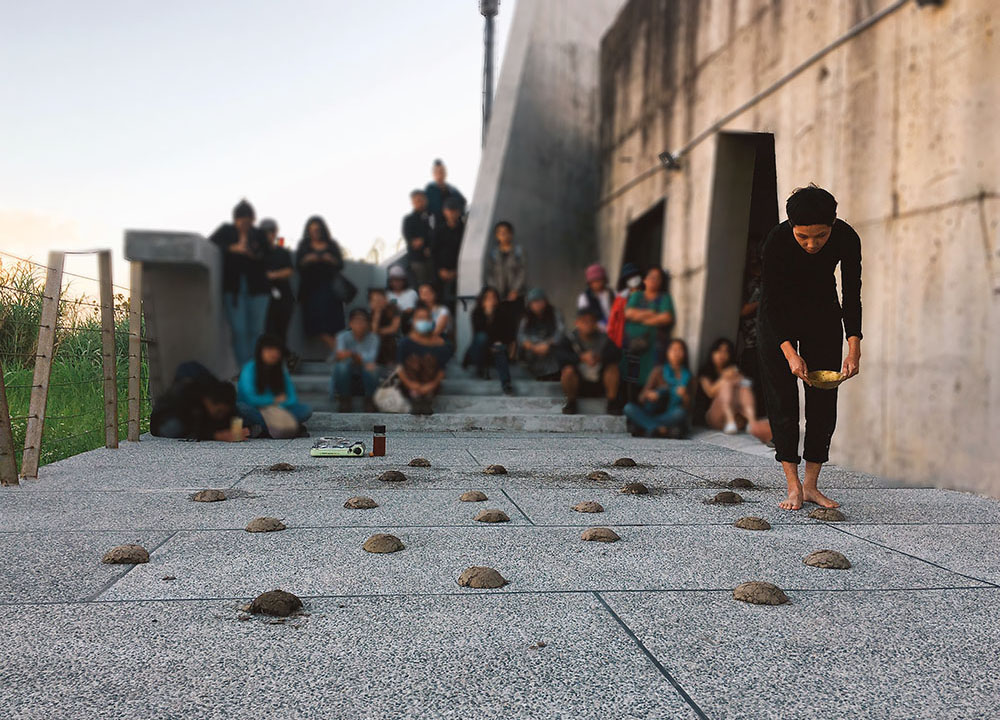


Perhaps, She Comes From/To ____ Alang weaves together three different narratives to re-examine queerness, gender, oral history, and displacement from land lost. The inspiration draws from the oral narrative that connects the relationship between bees and the land in the telling of the place of Temahahoi and another story concerning brass pots gifted to the tribal community members by the colonizers addresses issues related to the resulting infertility amongst many Indigenous people. This work engages with environmental issues, particularly the plight of bees, by
intertwining the close relationship between the imbalanced ecology and quiet queer bodies. Continuing and combining these oral herstories, Ciwas desires to have a specific qalang landmark, by creating a virtual land in the space of the Internet. To pin forward towards an Internet address https://raxal-mu.glitch.me that uses the Internet space to expand knowledge and connections beyond the soil and into the cloud.
* Alang or qalang means tribe or community in pan-Atayal language.
This work was supported by 2020 Pulima Art Festival - Taiwan Indigenous Peoples Cultural Foundation.
Live performance piece dependent on location
* Alang or qalang means tribe or community in pan-Atayal language.
This work was supported by 2020 Pulima Art Festival - Taiwan Indigenous Peoples Cultural Foundation.
Live performance piece dependent on location


Double-channel video stills, 2020
The Land in the Middle of the Pond
水池中的土地
Concept, Artistic Direction and Performance: Anchi Lin [Ciwas Tahos] / Cinematography: Liam Morgan / Project assistant: Julia Lin Kingham
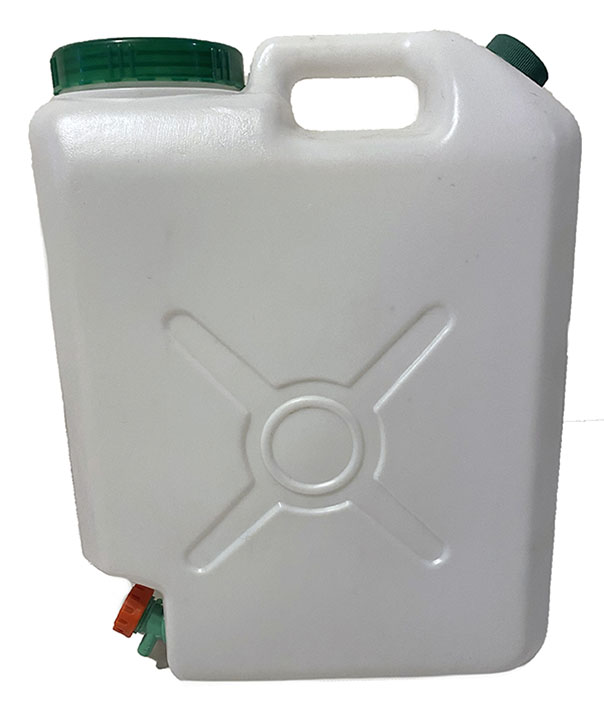
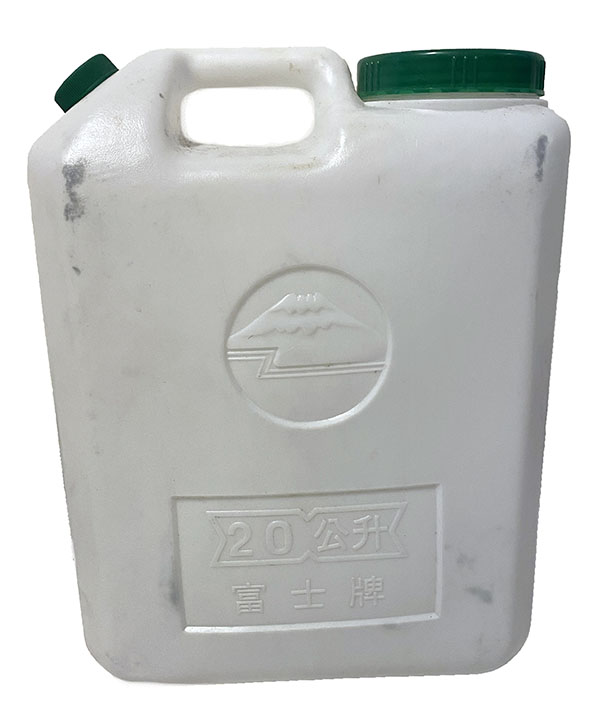
- Double-channel HD Video, colour, sound, duration 08 mins 09 secs (looped), x2 water containers, 2021
《水池中的土地》此作品創作於2021綠島人權藝術季影像拍攝地點為石門水庫,隱喩式地探討人為建設的水庫作為一個讓人流離失所的場域,透過一位在被迫流動之下的泰雅族卡拉社阿嬤的視角,試圖勾勒出跨空間性的對話與跨地域性的禁錮想像,而錄像中不同的女性族人與植物交換名字作為一種無形中與土地連結的儀式。
![]()
![]()
The
Land in the Middle of the Pond makes reference to the 1950’s forced
displacement of the Atayal Qara community from their ancestral territory for
the construction of the Shimen Reservoir – now the main water supply for
Northern Taiwan. Throughout the video, we hear the voice of an elder who recalls the events which resulted in
the forced displacement of her community and the impact of diaspora. In the video we see Ciwas tracing veins that run along her limbs like rivers. During the performance, later Ciwas and other Atayal women engage in an Atayal name exchange ritual, between person and plant. This customary ritual
Ciwas employs like the tracing of her bloodline at the reservoir, as a symbolic
act for reconnecting with her ancestral land while affirming her identity
past, present and future.
“Land in the Middle of the Pond depicts the biopolitics of the Qara Atayal community as it intertwines with the river. The work employs different rituals to respond to a history of forced relocation, pollution, and disease — rituals such as painting the veins of one’s legs, carrying water from the reservoir, and the exchanges of names between people and plants. At the same time, it serves as a bridge point and positive call which permeates between individuals.” Tides in the Body Curator Wu Hung-Fei
“Land in the Middle of the Pond depicts the biopolitics of the Qara Atayal community as it intertwines with the river. The work employs different rituals to respond to a history of forced relocation, pollution, and disease — rituals such as painting the veins of one’s legs, carrying water from the reservoir, and the exchanges of names between people and plants. At the same time, it serves as a bridge point and positive call which permeates between individuals.” Tides in the Body Curator Wu Hung-Fei
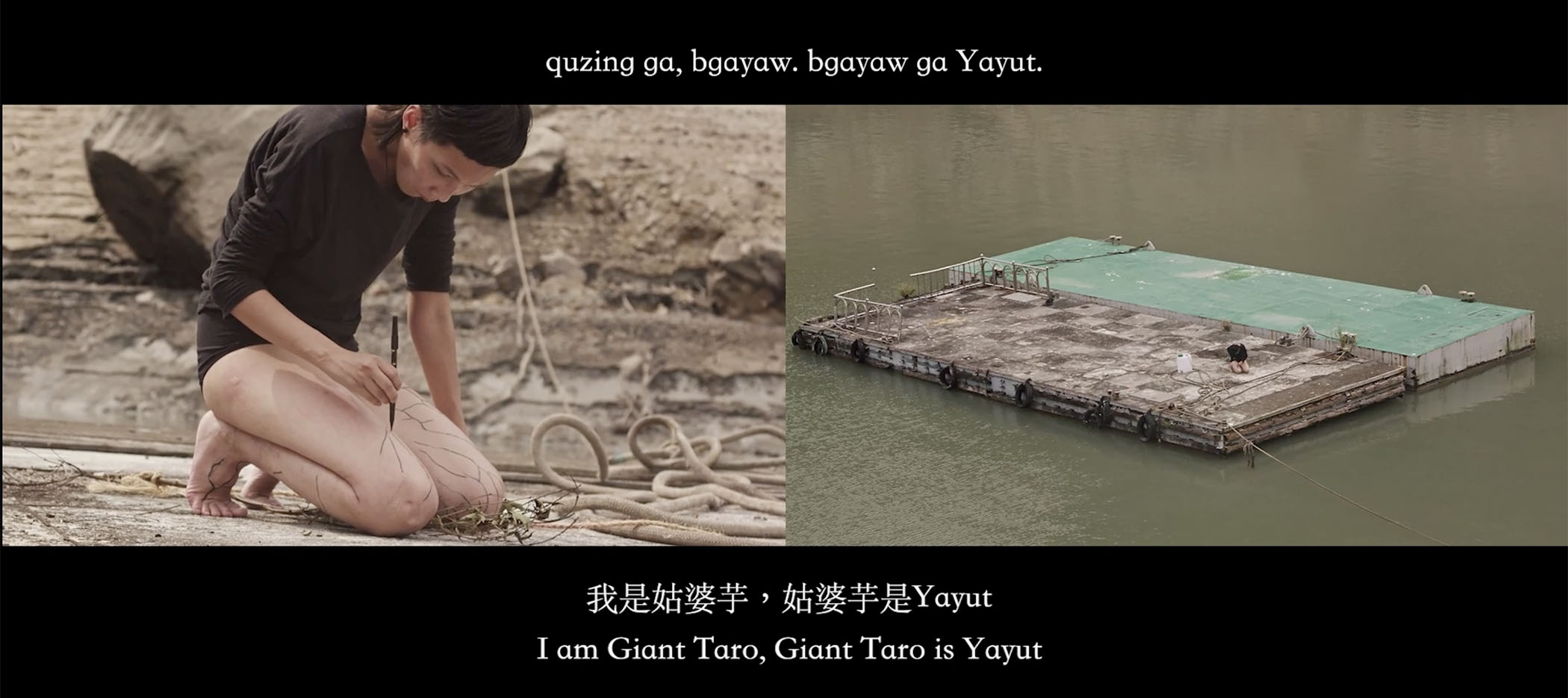
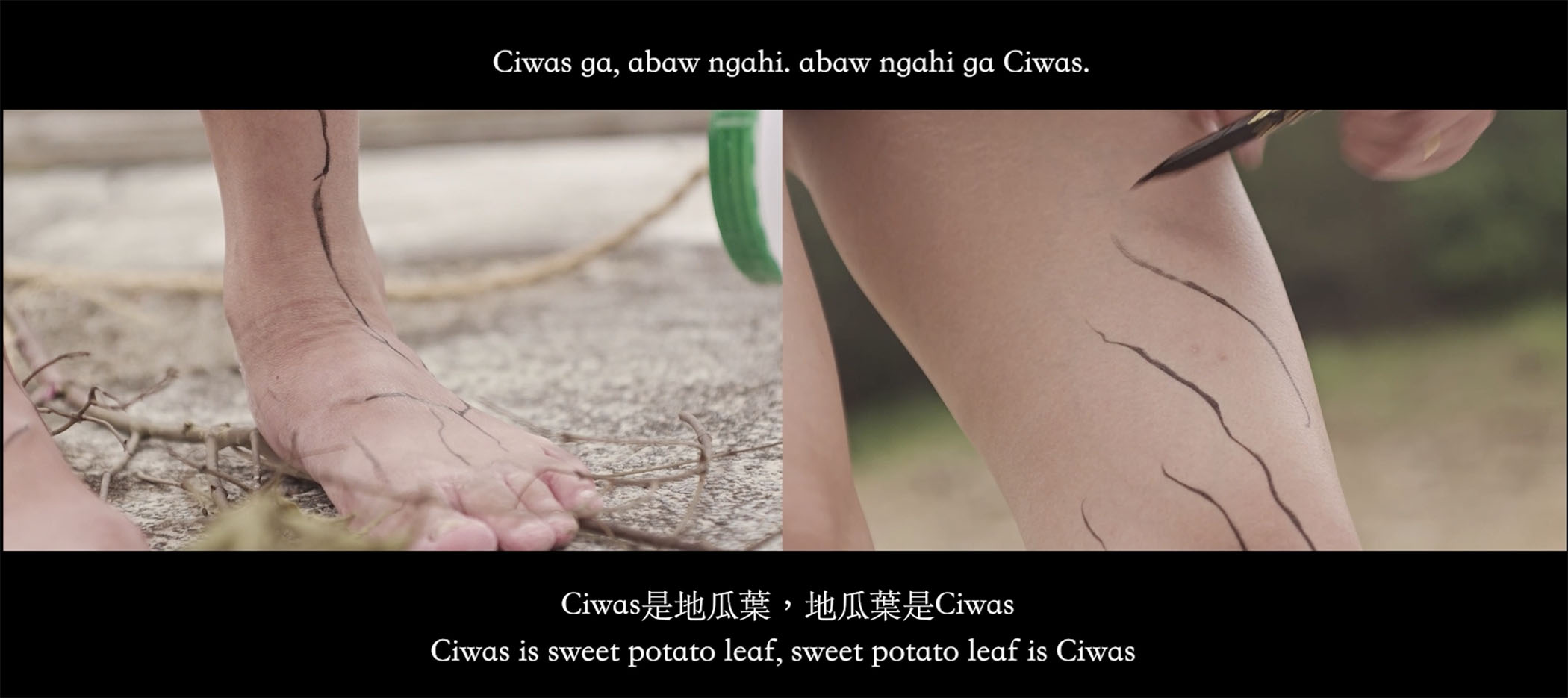
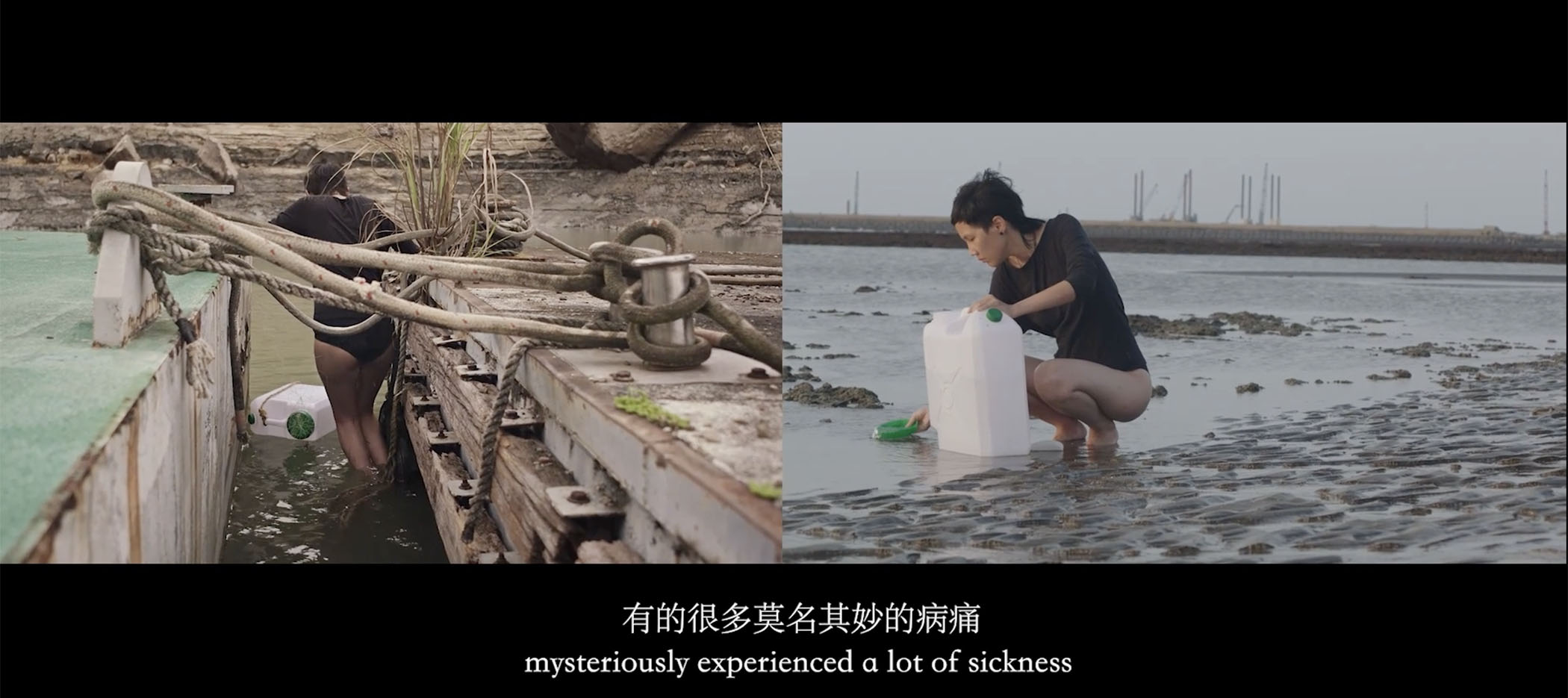
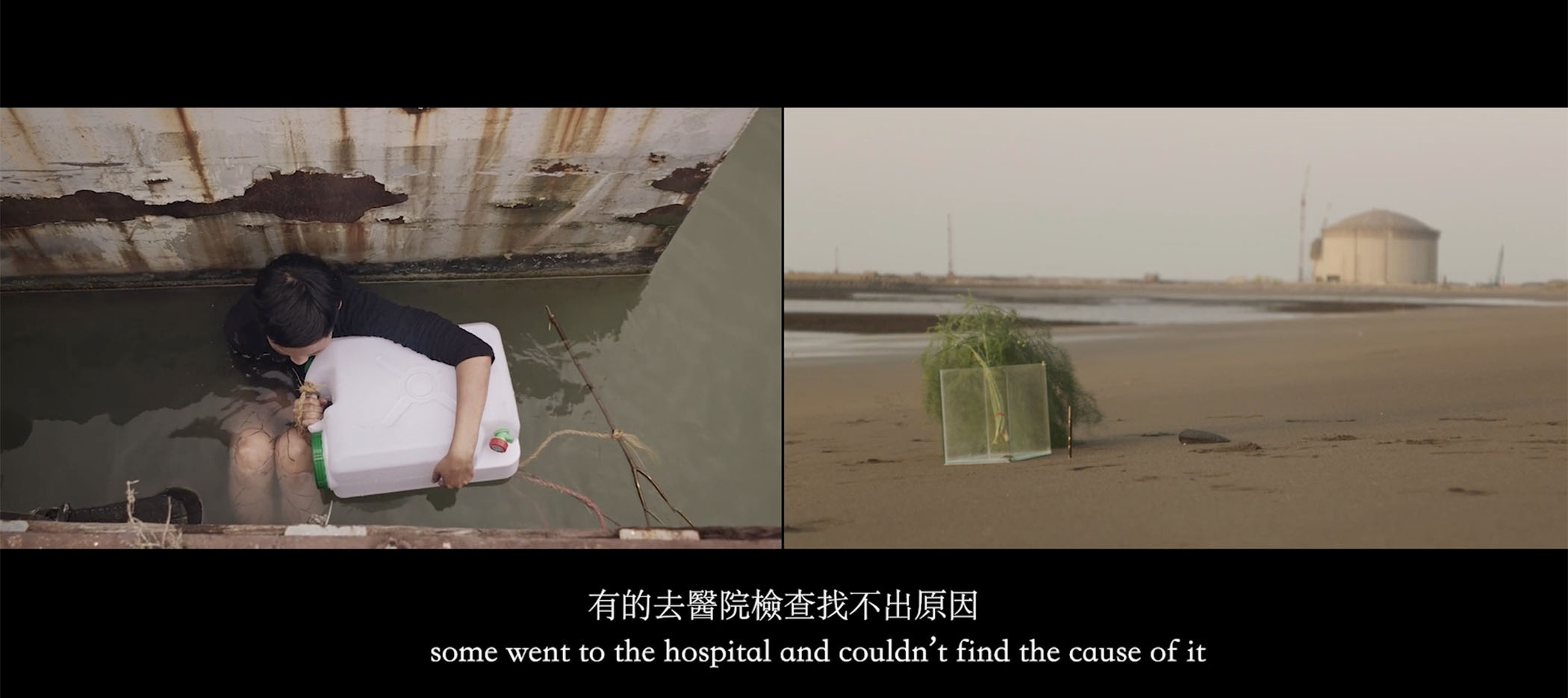
Two-channel video stills, 2021
Tgayaw Wagi 太陽躺下了Sun laid down
Concept and performance: Anchi Lin [Ciwas Tahos] / Videographer: Julia Lin Kingham / Music composer: 陳臨霜 Chen Lin-Shuang
- Single-channel HD Video, colour, sound, duration 06 mins 35 secs (looped), 2021
《tgayaw wagi》是泰雅語用於描述日落的時刻,直譯為「太陽落下」,而這也反應了台北市
萬華區華西街的日落時間。早在 80 年代,許多年輕的未成年原住民婦女因家庭債務,因此
這裡被迫從事性工作,作為償還債務的一種。Ciwas 先前拜訪新竹後山的泰雅族部落的一群
耆老們,他們是 80 年代原住民維權運動的先驅,當時他們不斷地想要救出那些需要被保護
和被幫助華西街的婦女。這類議題很少在主流社會被討論,因此,透過此作品旨在提高人們
對台灣這段黑暗歷史的認識,當時台灣經濟繁榮,而另一些社區(部落)則是因殖民化和新
自由主義資本主義的影響,處於不平等以及掙扎的狀態。此行為錄像創作為持續發展作品,
試圖重新想像被受限的女性身體重新出現在那些被遺忘公共空間的角落。
tgayaw wagi is the Atayal term for describing the moment of sunset, translated as ‘sun laid down’. This English translation mirrors the sunset hour on Hua Xi Street, Wanhua District in Taipei City, Taiwan. During a journey to Hsinchu, Ciwas met a group of Atayal elders who were part of Indigenous rights activism that sought to find, protect, and help women pushed into prostitution. This performance attempts to re-imagine the quiet and unacknowledged bodies. The phantom of memories reappear in these corners of the public space for those whose history has been lost or forgotten.
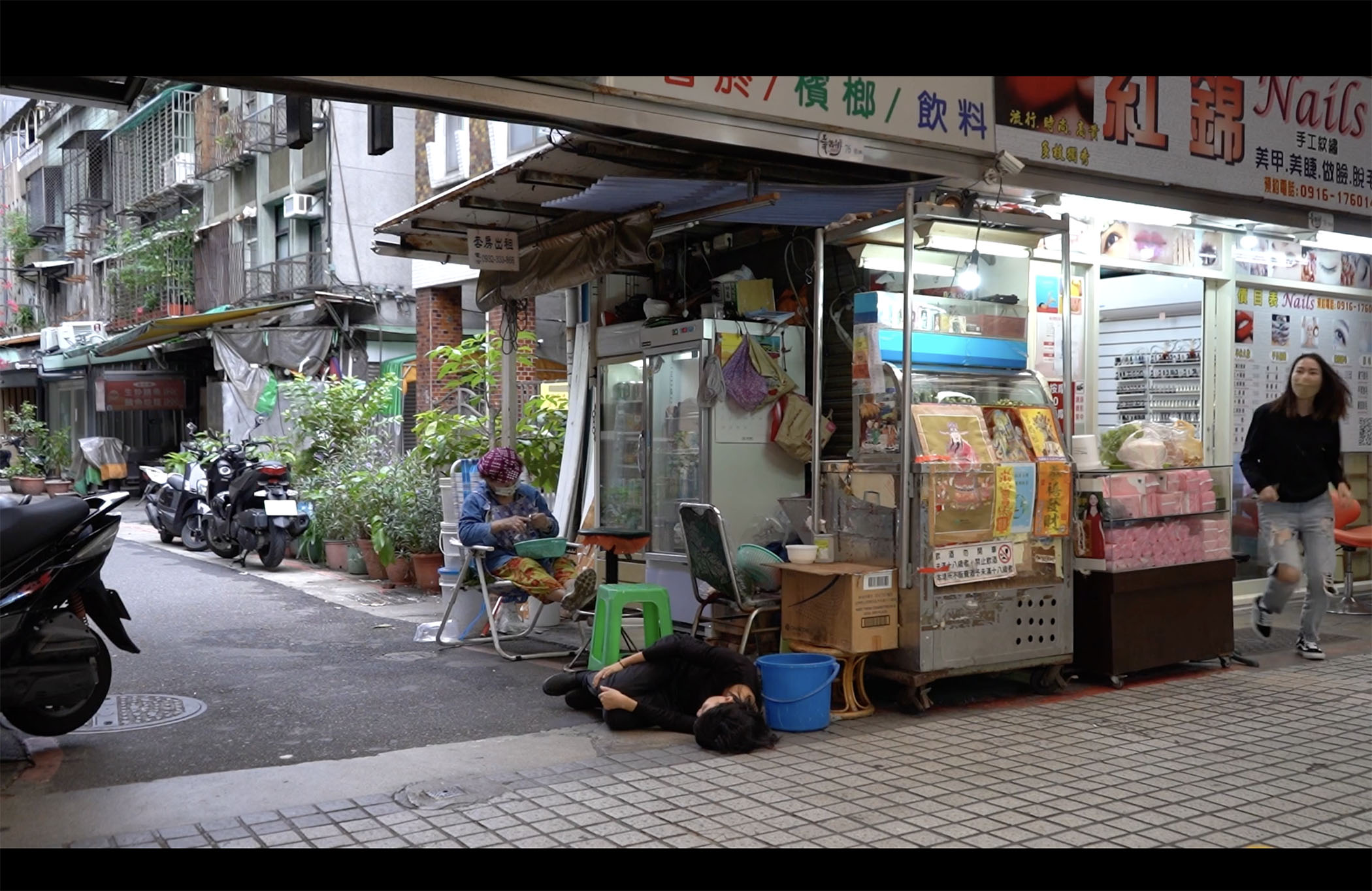
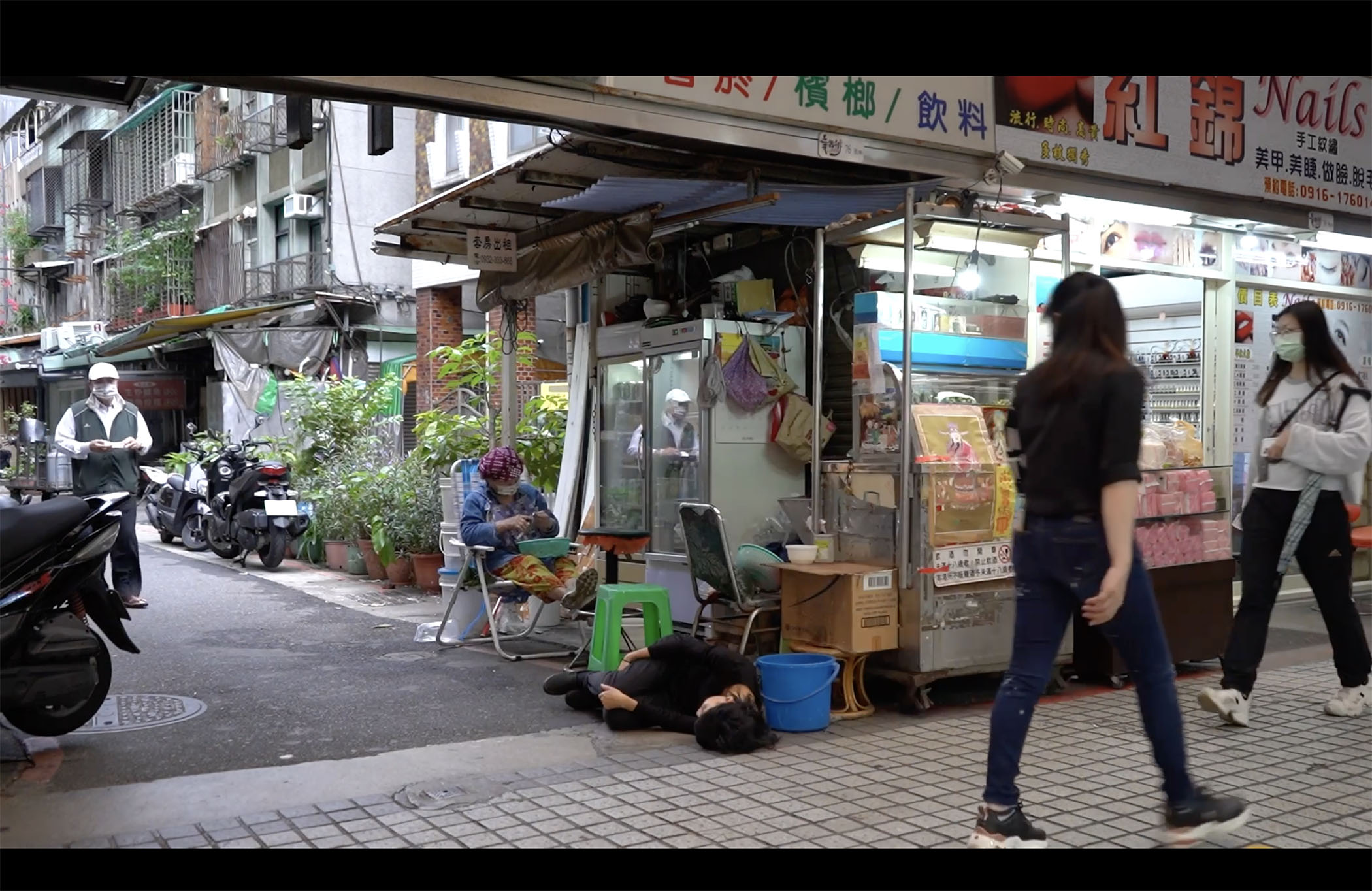

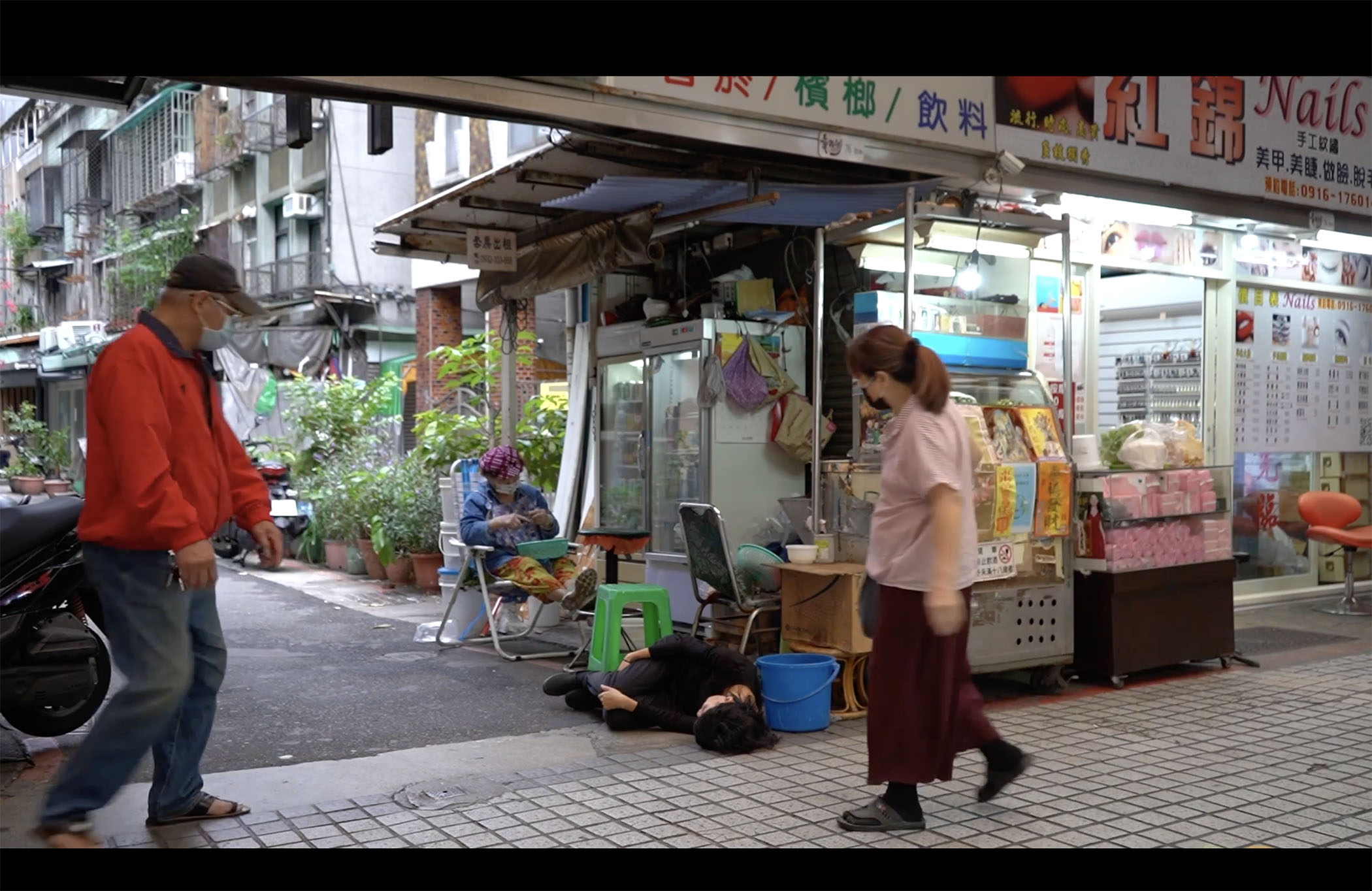
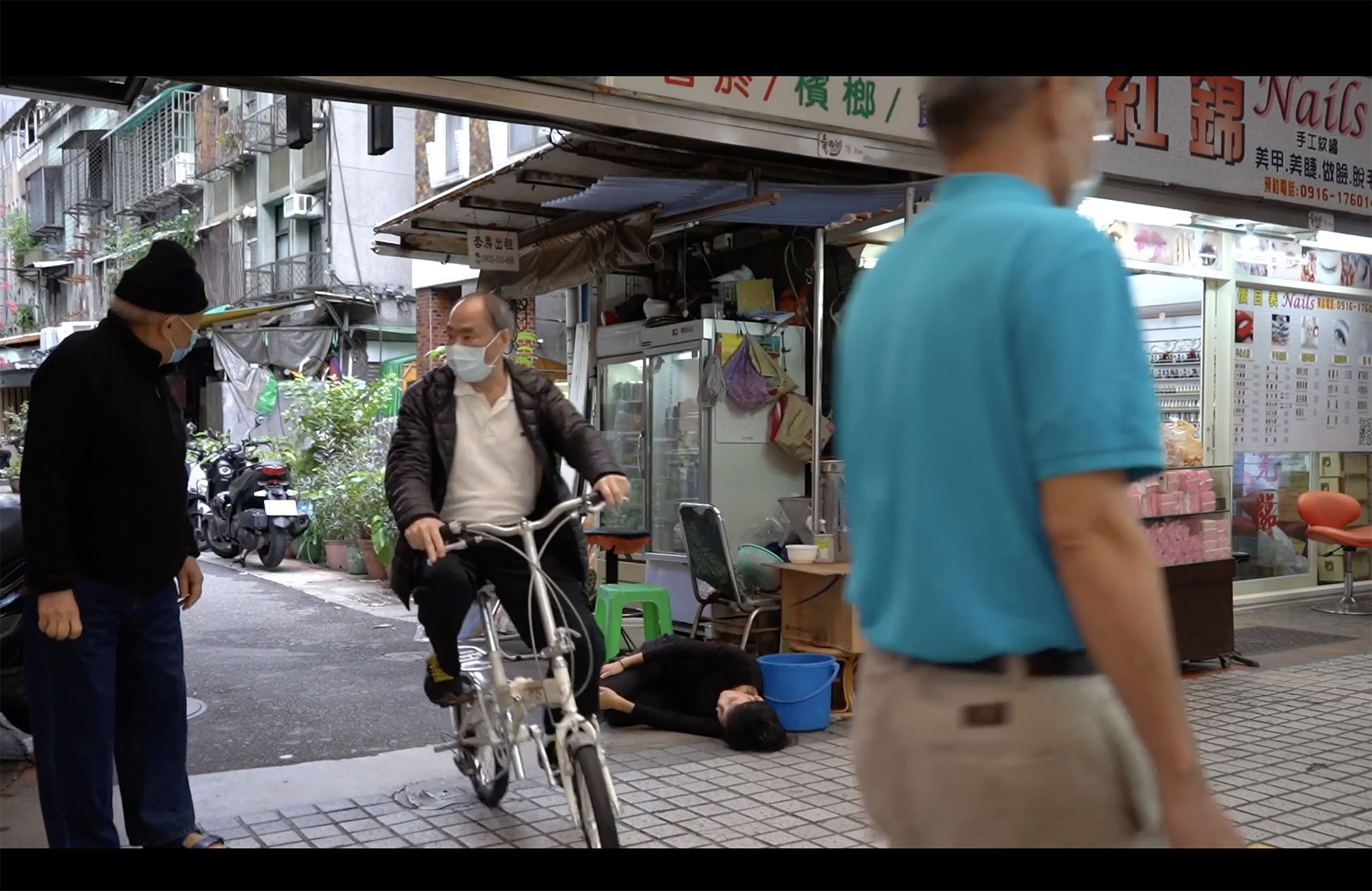
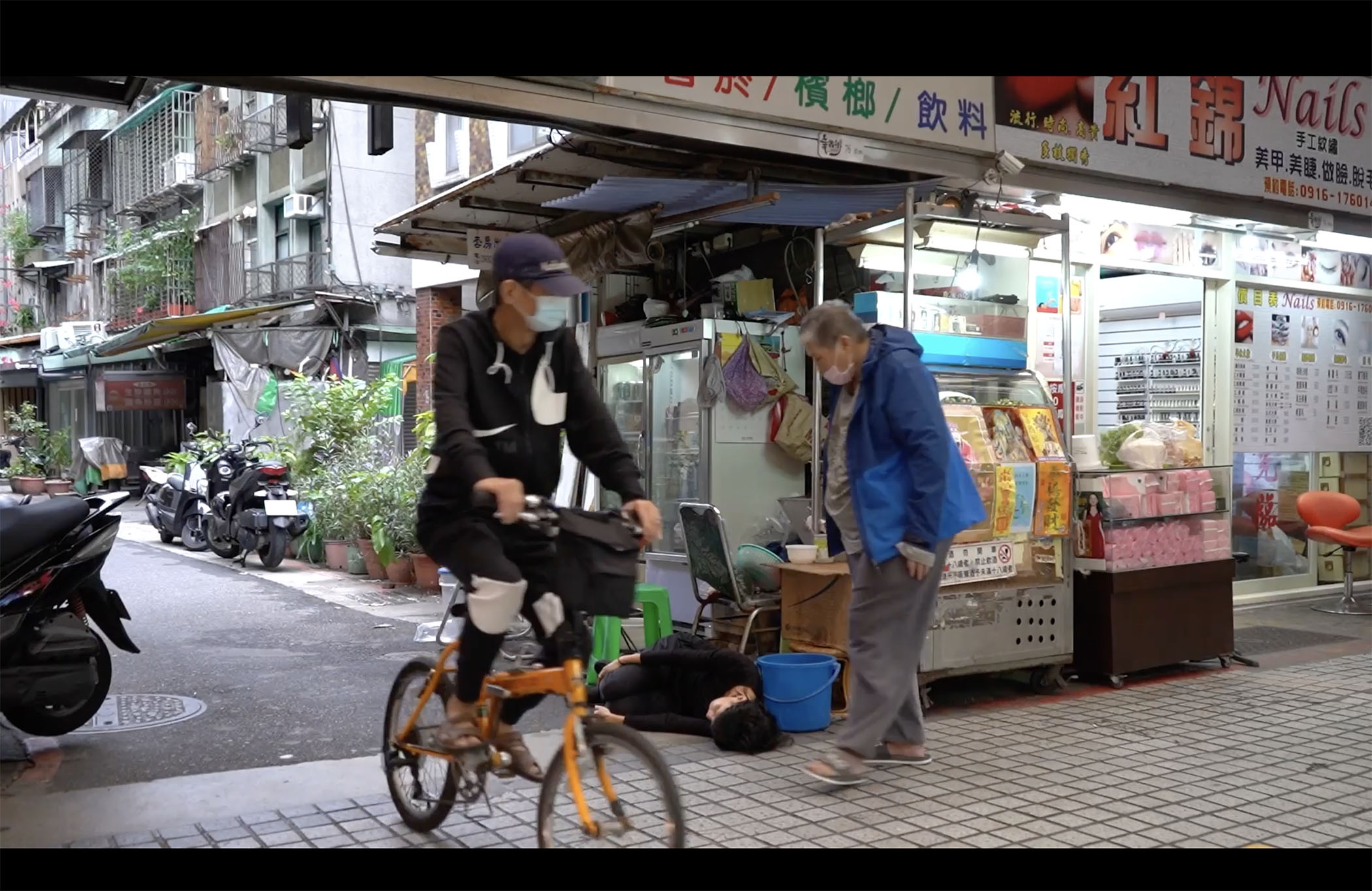
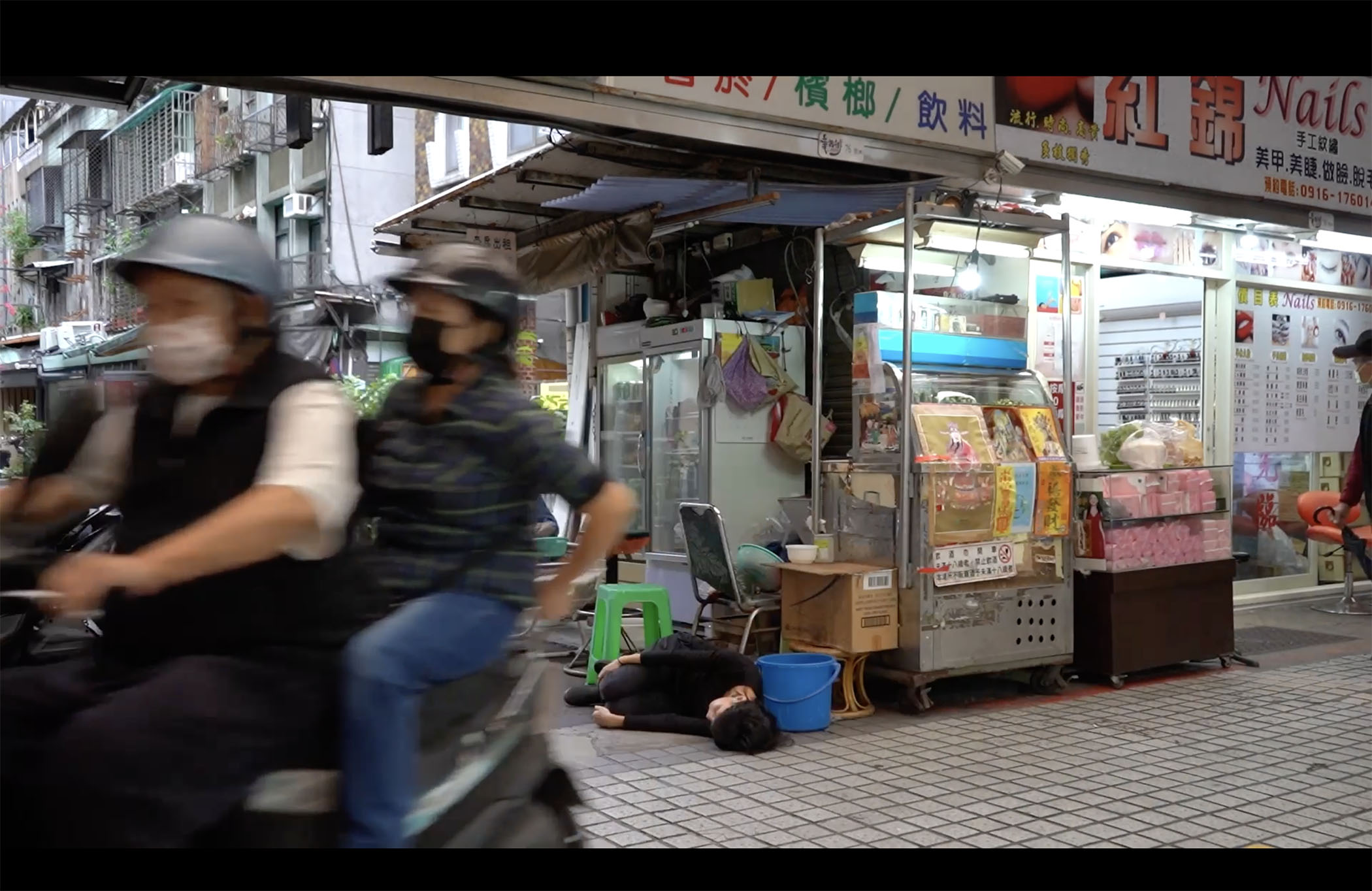
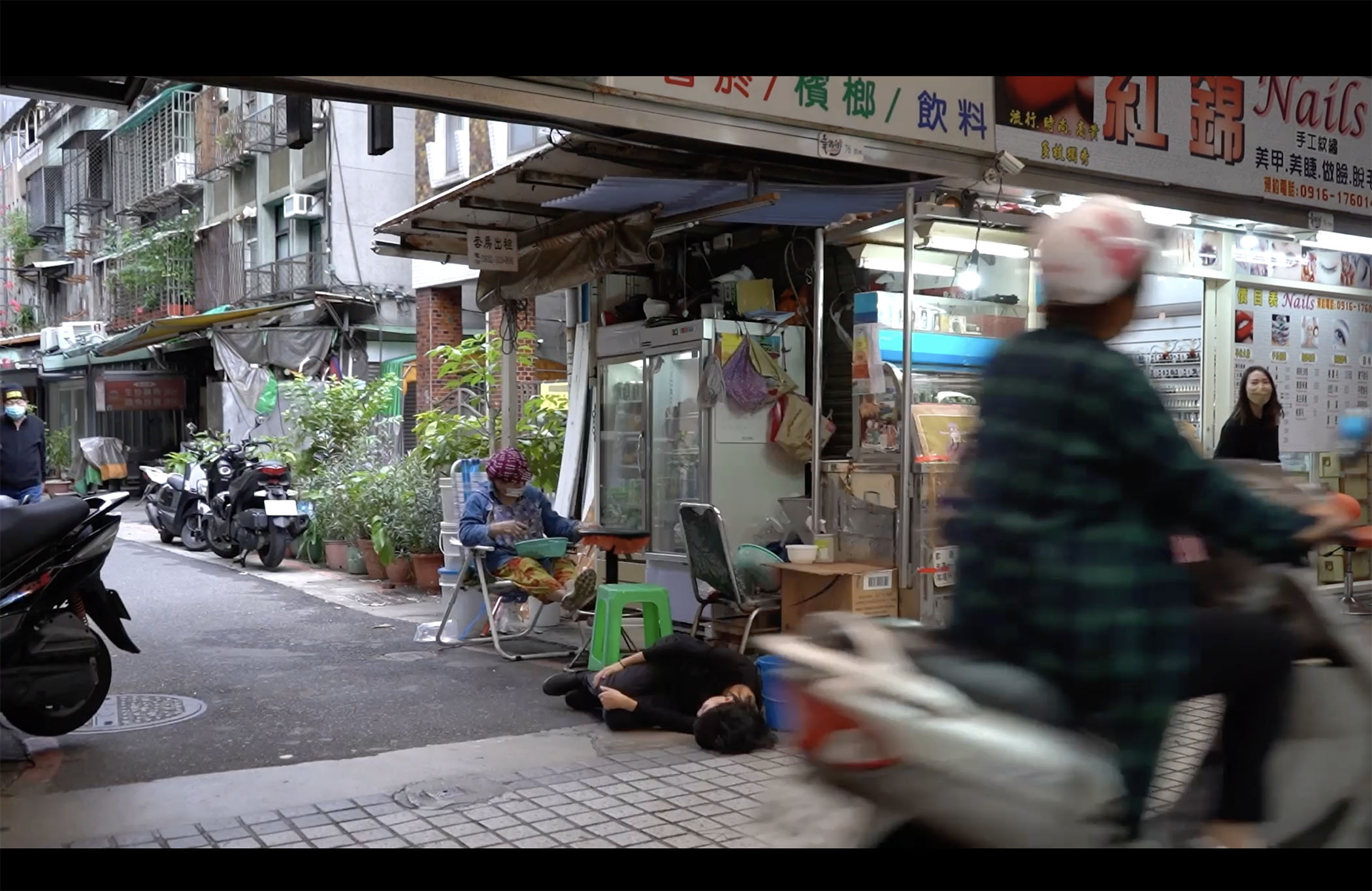
Performance video stills, 2021